Precise Pressure Relief for Demanding Industrial Applications
In high-pressure technology, reliably limiting system pressure is essential for protecting both people and machinery. KAMAT’s pressure relief valves are specialized hydraulic components that precisely divert excess flow rates and prevent critical pressure spikes—even under extreme conditions up to 4000 bar and flow rates of up to 4600 l/min.
KAMAT offers you customized high-pressure technology solutions for your projects. We look forward to your inquiry!
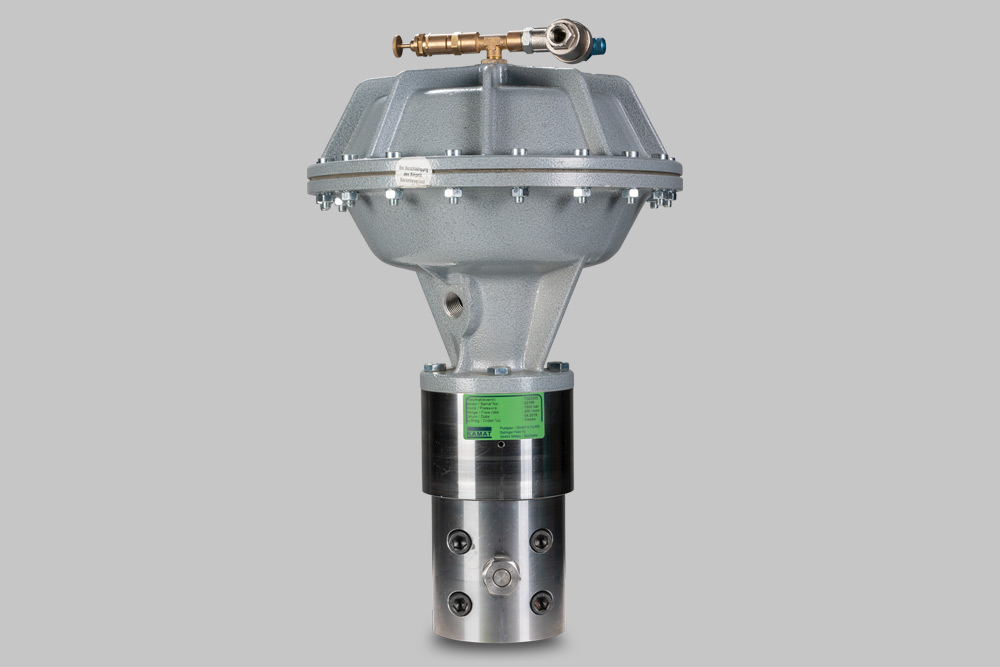
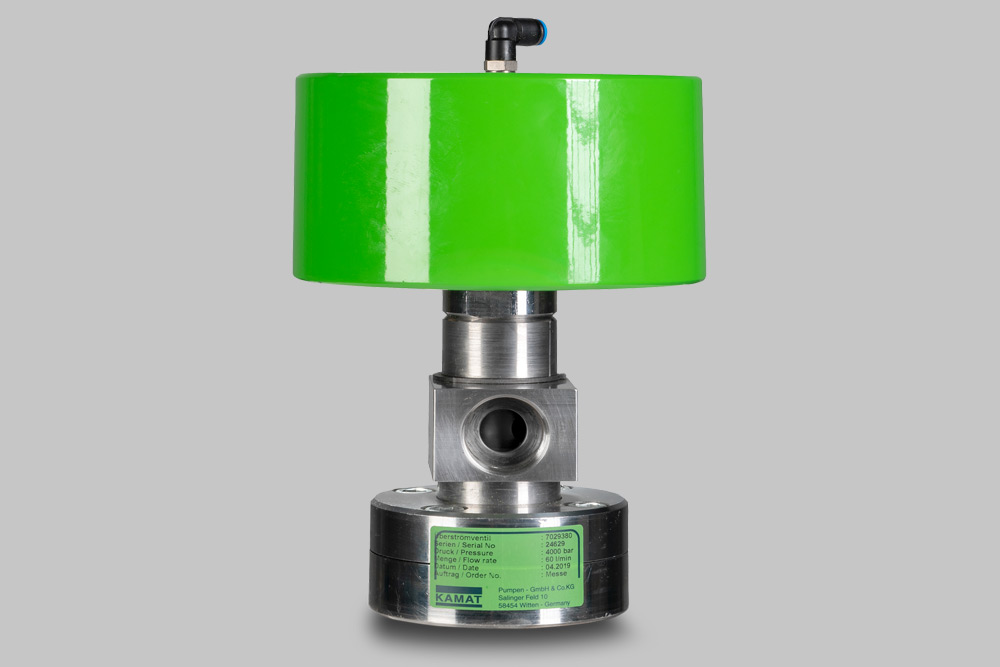
- pneumatic (= remote controllable, low hysteresis) or spring-loaded
- up to 4,000 bar
- up to 4,600 l/min
- control rod and valve seat made of ceramic or stellite
- centered control rod, made of steel possible
- measuring connection for pressure transducer available
- special materials available
- flanged directly to the pump
- ATEX possible
How It Works: Precision in Bypass Operation
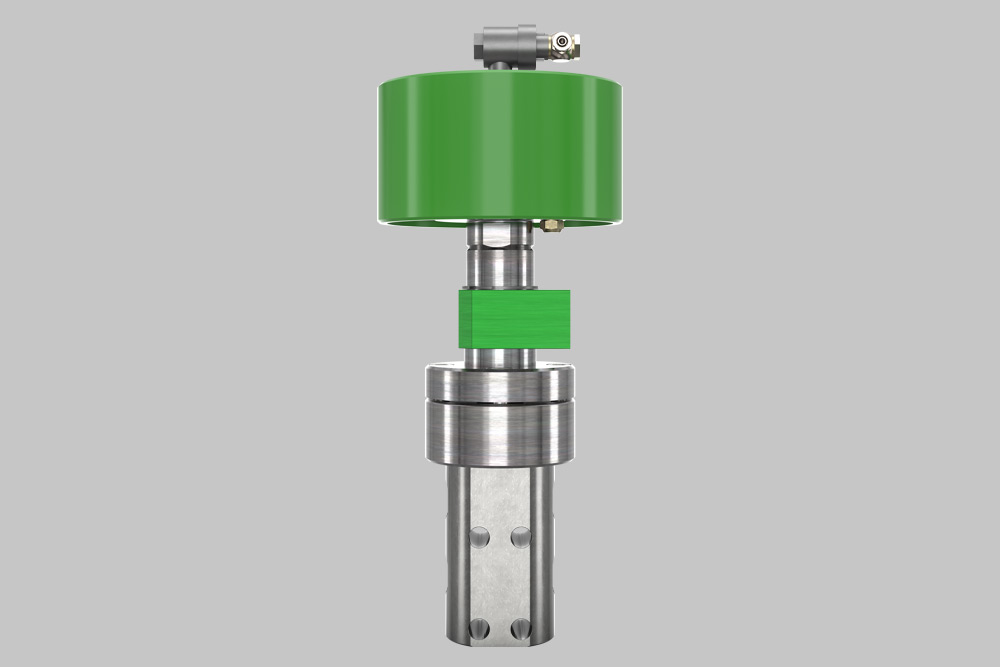
A pressure limiting valve protects the system using a mechanical or pneumatic barrier. A piston or diaphragm closes the bypass using a predefined external force (spring or air pressure).
As soon as the system pressure reaches the set maximum value, it overcomes this counterforce: The valve opens in a controlled manner, and the excess flow escapes into the bypass. If the pressure drops below the threshold value, the valve closes automatically due to the spring or pneumatic force, restoring the stable operating pressure.
Features of KAMAT pressure limiting valves:
- Variable pressure setting: The maximum pressure can be precisely adjusted at any time and flexibly adapted to changing process requirements.
- Essential safety function: Reliable protection against overpressure damage to pumps, lines, and fittings—ensuring the safety of personnel and equipment.
- Versatile system integration: Optimized for use in complex hydraulic systems, particularly as a perfectly matched component for KAMAT high-pressure pumps.
Applications of Pressure Limiting Valves
- Industrial Cleaning: Protection of high-pressure water jet systems.
- Process Industry: Safe pressure relief during the dosing of chemical and abrasive media.
- Oil & Gas: Rugged offshore use under extreme environmental conditions (DNV-GL compliant).
- Mining: High-pressure protection for hydraulic support systems and walking machines.
KAMAT: Your Partner for Precise Pressure Relief in Industrial High-Pressure Technology
KAMAT pressure relief valves are the backbone of safety in high-pressure systems. Our valves have been specifically designed to meet the demanding requirements of plunger pumps. They ensure optimal operating pressure and enable precise pressure relief—either via a self-contained mechanical system or an intelligent pneumatic control system.
Why KAMAT?
- Versatility: Use of specialty materials for demanding process media.
- Robustness: Maximum durability thanks to high-end materials such as ceramics.
- Automation: Flexible remote control via pneumatics for modern Industry 4.0 systems.
- Customization: Tailored material selection and configuration for your specific application.
Trust KAMAT’s expertise for your high-pressure applications.
| Pressure Regulators mechanic/pneumatic | Technical Data | 266.8 | KB | |
| Unloader Valves mechanic/electric | Technical Data | 193.3 | KB | |
| Control Valves pneumatic/electric | Technical Data | 209.3 | KB | |
| Safety Valves | Technical Data | 360.1 | KB | |
| Suction Valve Lifter, pneumatic | Technical Data | 274.3 | KB | |
| Dump Valves | Technical Data | 234.1 | KB | |
| Foot Valves and Electric Foot Switch | Technical Data | 205.2 | KB |
Frequently Asked Questions About Pressure Relief Valves
Inside the valve, an external force – typically a spring or pneumatic pilot pressure – holds a control rod against the valve seat in the closed position. When system pressure rises above the set value, it overcomes this force, the control rod lifts off the seat, and the excess flow is diverted through the bypass. The process runs fully automatically and without external intervention.
A pressure relief valve does not serve solely as an overpressure safeguard in an emergency – it also sets the desired working pressure and maintains it at a constant level. This is what distinguishes it from a pure safety valve.
Pressure relief valves are used wherever overpressure can cause damage to equipment or create hazardous conditions. A typical application is high-pressure systems with plunger pumps, as operated in the process industry, the chemical industry, and the oil and gas industry.
KAMAT manufactures the valves from specialty materials suited to use with demanding media. The control rod and valve seat are made from ceramic or Stellite, ensuring particularly high wear resistance and long service life. On request, the material selection can be individually matched to the specific medium and application.
Yes. KAMAT pressure relief valves are available with pneumatic remote control, allowing the maximum pressure to be adjusted flexibly and without direct access to the valve. Material selection and pressure setting can also be individually adapted to the respective application.
Both protect high-pressure systems against impermissible pressure, but they serve different functions. The pressure relief valve is part of ongoing pressure regulation: as pressure rises, the valve opens proportionally and diverts a portion of the flow back through a bypass line, keeping the operating pressure stable even when nozzle openings, consumers, or process parameters change.
A safety valve, by contrast, is a pure protective element. Spring-loaded safety valves are set to a defined trigger pressure and open only when that value is exceeded; once the pressure is relieved, they close again and return the system to normal operation. A safety valve responds rapidly and is positioned as close as possible to the pump outlet. It is designed exclusively as a safety element and is not intended for continuous duty.
In practice, both are used in combination: the pressure relief valve maintains working pressure during normal operation, while the safety valve acts as the last line of defense against overpressure. Together with the bypass, they form a coordinated safety and control concept.