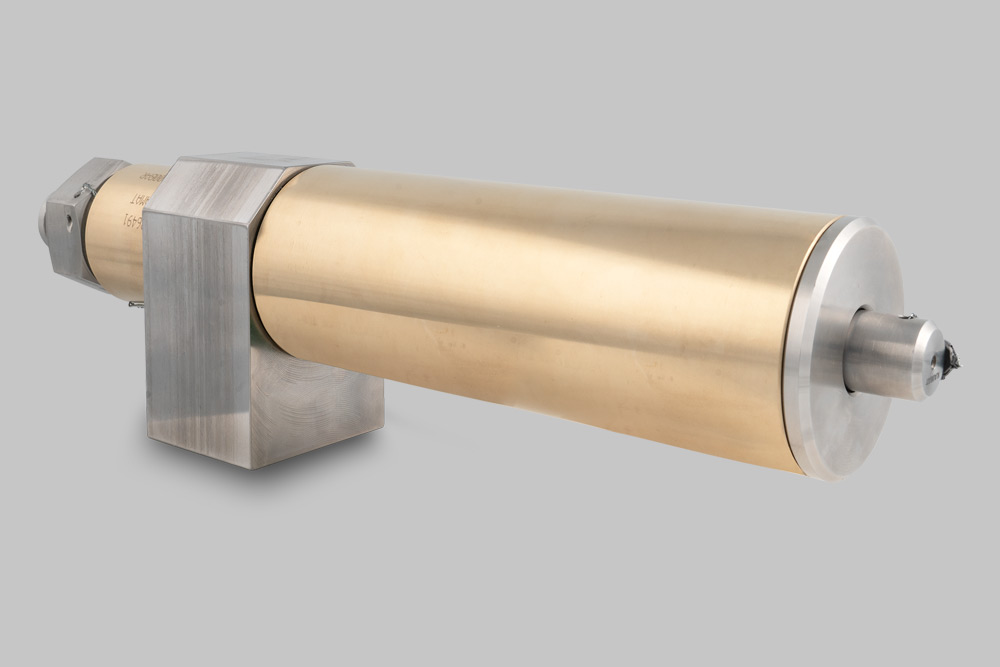
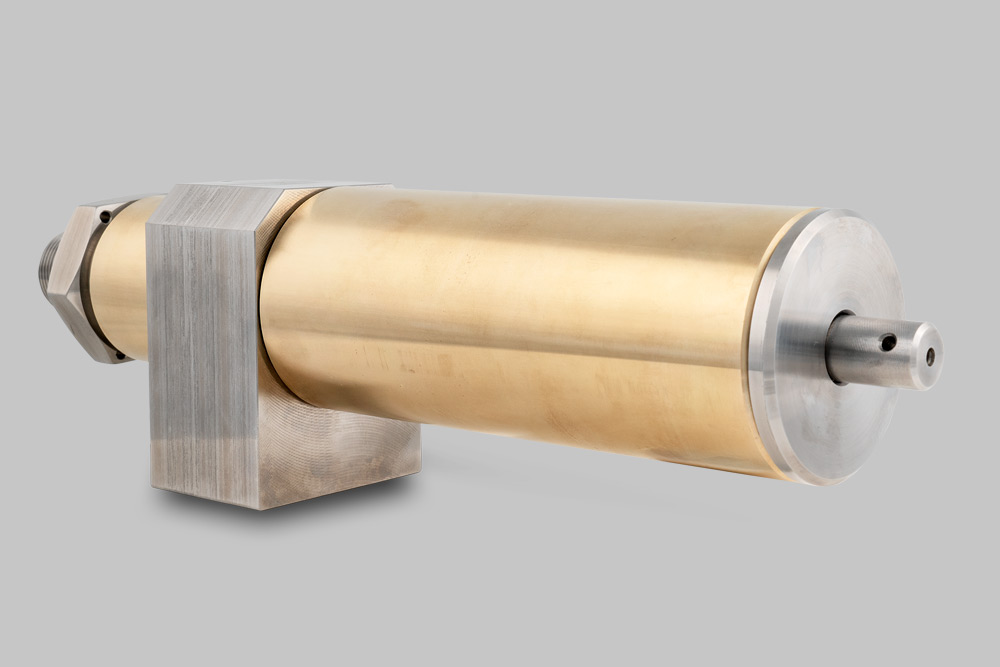
the KAMAT safety valves
Free Inquiry

KAMAT offers you customized high-pressure technology solutions for your projects. We look forward to your inquiry!

Technical Specification
  • full-lift valves
  • spring loaded
  • single or pilot-controlled version for more flow
  • up to 4,000 bar
  • up to 4,700 l/min
  • DN 2,5 to DN 50
Special Features
  • safety valve adjusts to the setting pressure again after opening
  • quickly detects cavitation peaks in continuous operation
  • up to 4,000 bar infinitely adjustable at the factory
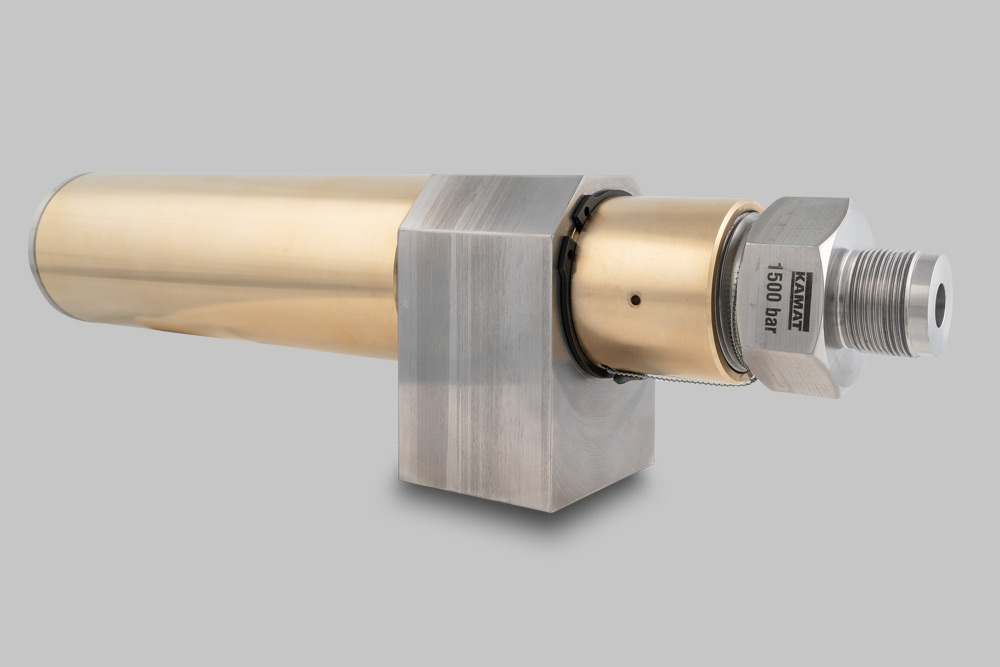
  • is delivered sealed and with a sticker with a test date
  • independent adjustment and reparation possible
  • also suitable for ATEX
Part number
How to use
To get a dimensional drawing from our CAD library, just double-click the 7-digit part number of the desired product and enter it in the search box.

Soon you can see all available drawings in the three formats: .dxf, .pdf and .stp.

High-Performance Safety Valves for Demanding Applications

KAMAT safety valves are specially designed for use in high-pressure systems with plunger pumps and are precisely adjusted for operating pressures of up to 4,000 bar. Designed as full-stroke safety valves, they reliably protect pumps, pipes and system components from impermissible pressure peaks – in classic water applications as well as in demanding media and ATEX-relevant areas.

Each valve is tested, adjusted and sealed at the factory. This ensures that the defined trigger pressure is reproducibly maintained and that your system complies with the required safety standards.

Greater safety, predictability and efficiency

With KAMAT safety valves, you not only get an individual product, but a safety component tailored to your high-pressure system.

  • Process safety: defined response pressure, tested and sealed.
  • System availability: protection against damage caused by overpressure and pressure surges.
  • Flexibility: various designs, ATEX options and material variants.
  • Engineering support: support with design, integration into bypass and pressure control concepts, and combination with speed-controlled drives and other KAMAT components.

In this way, our safety valves contribute to the safe, efficient and permanently stable operation of high-pressure systems with plunger pumps.

PDF View

Downloads
Pressure Regulators mechanic/pneumatic Technical Data PDF Icon 266.8 KB
Unloader Valves mechanic/electric Technical Data PDF Icon 193.3 KB
Control Valves pneumatic/electric Technical Data PDF Icon 209.3 KB
Safety Valves Technical Data PDF Icon 360.1 KB
Suction Valve Lifter, pneumatic Technical Data PDF Icon 274.3 KB
Dump Valves Technical Data PDF Icon 234.1 KB
Foot Valves and Electric Foot Switch Technical Data PDF Icon 205.2 KB

Why are safety valves indispensable in high-pressure systems?

Unlike centrifugal pumps, plunger pumps deliver a nearly constant flow rate. If the pressure side is closed or severely restricted, the pressure will rise until the weakest component fails. Therefore, a fast-responding mechanical safety valve is the central protective component of any high-pressure system.

Spring-loaded safety valves are set to a defined trigger pressure and only open when this value is exceeded. After relieving the pressure, they close again and allow the system to return to normal operation.

Important principles for safe use:

  • The safety valve must be located as close as possible to the pump outlet, with no shut-off devices in between.
  • The safety valve is designed purely for safety and is not intended for continuous operation.
  • Frequent response from the safety valve indicates faults in the system, such as nozzles that are too small or dirty, blocked lines or cavitation.

Electronic shut-off systems or bursting discs can supplement the safety concept, but cannot replace a mechanical safety valve as they either react too slowly or have a high tolerance threshold.

KAMAT safety valves, specially developed for use in high-pressure systems with plunger pumps, are precisely adjusted for operating pressures of up to 4,000 bar. As full-stroke safety valves, they reliably protect pumps, pipes and system components from impermissible pressure peaks – both in classic water applications and in demanding media and ATEX-relevant areas.
Each valve is tested, adjusted and sealed at the factory. This ensures that the defined trigger pressure is reproducibly maintained and that your system complies with the required safety standards.

Designs and variants

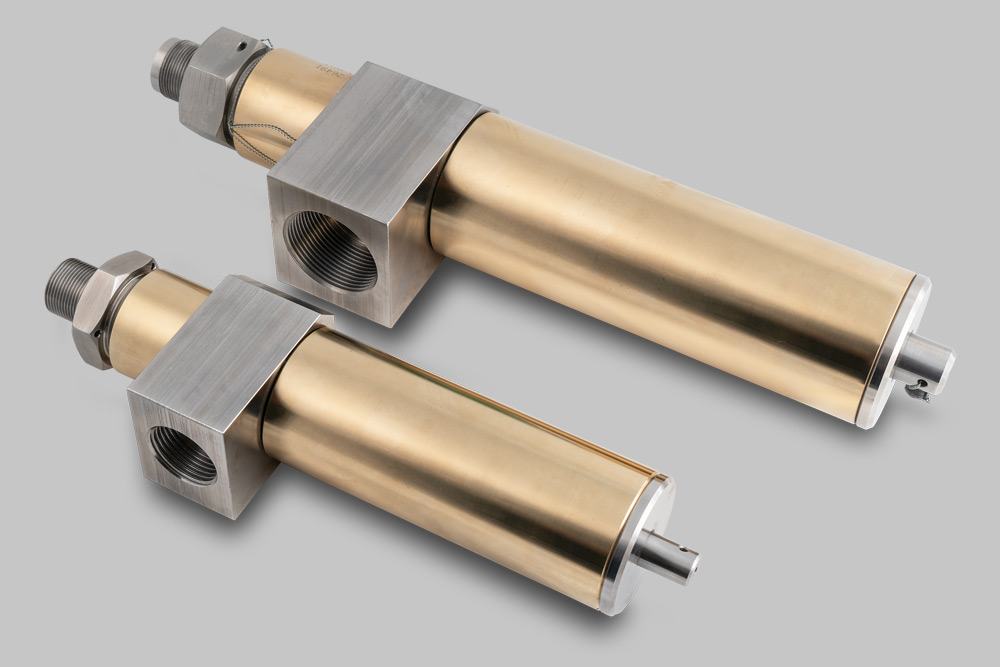
Our safety valves are available in two main designs and can be precisely tailored to the medium, pressure level and operating conditions.

  • Standard high-pressure valves (spring-loaded)
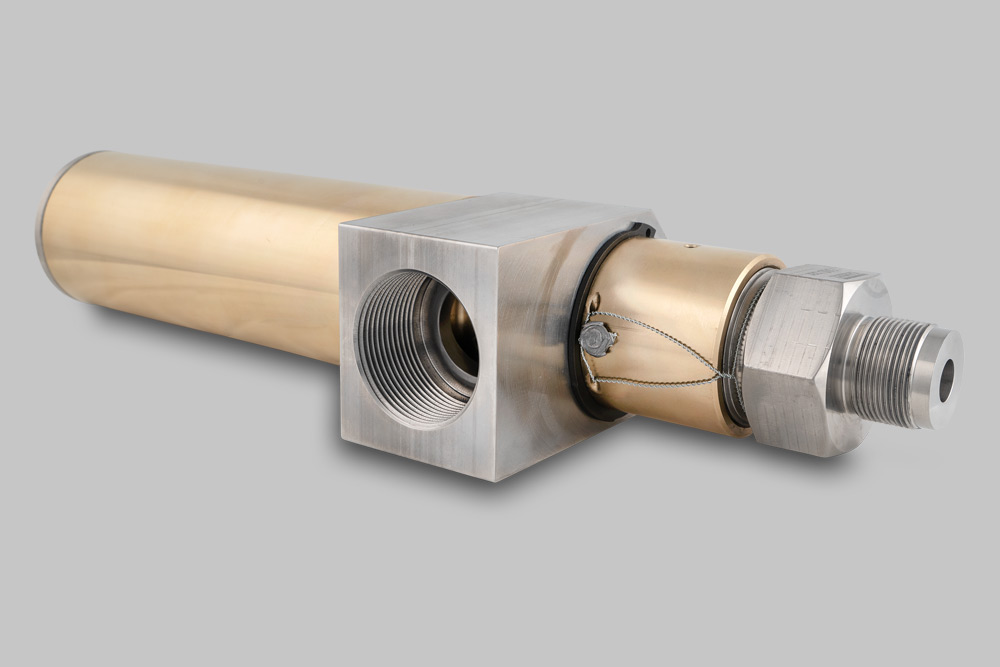
  • Spring-loaded full-lift safety valves with rotatable bypass connection. The bypass enables efficient discharge of the medium in the event of activation and flexible integration into the piping layout.
  • Pilot-operated safety valves
  • Pilot-operated full-lift safety valves that are integrated into the system via a block flange. They allow particularly precise control of the flow and are suitable for applications with high pressures and dynamic operating conditions.

Both variants are:

  • designed for industrial high-pressure applications with positive displacement pumps.
  • available in versions that comply with the ATEX directive and
  • also available in special materials for the safe handling of aggressive, erosive or temperature-critical fluids.

This allows the safety valves to be precisely adapted to your application – from classic high-pressure water cleaning to process media, test benches or water hydraulics.

Supplementary pressure limitation and bypass concept

In many systems, a pressure relief valve is recommended as a second stage of pressure control in addition to the actual safety valve. It functions like a ‘self-adjusting nozzle’:

  • As the pressure rises, the valve opens proportionally and diverts part of the volume flow back via a bypass line.
  • This keeps the operating pressure stable, even if nozzle openings, consumers or process parameters change.

The bypass line is a safety-critical element in this context.

  • It must be able to accommodate the volume flow to be diverted at moderate flow velocities (guideline value: max. approx. 5 m/s).
  • Shut-off devices in this line should be kept to a minimum and monitored so that the pump cannot start up when the bypass line is closed.

In this way, the safety valve, pressure relief valve and bypass form a coordinated safety and control concept.